
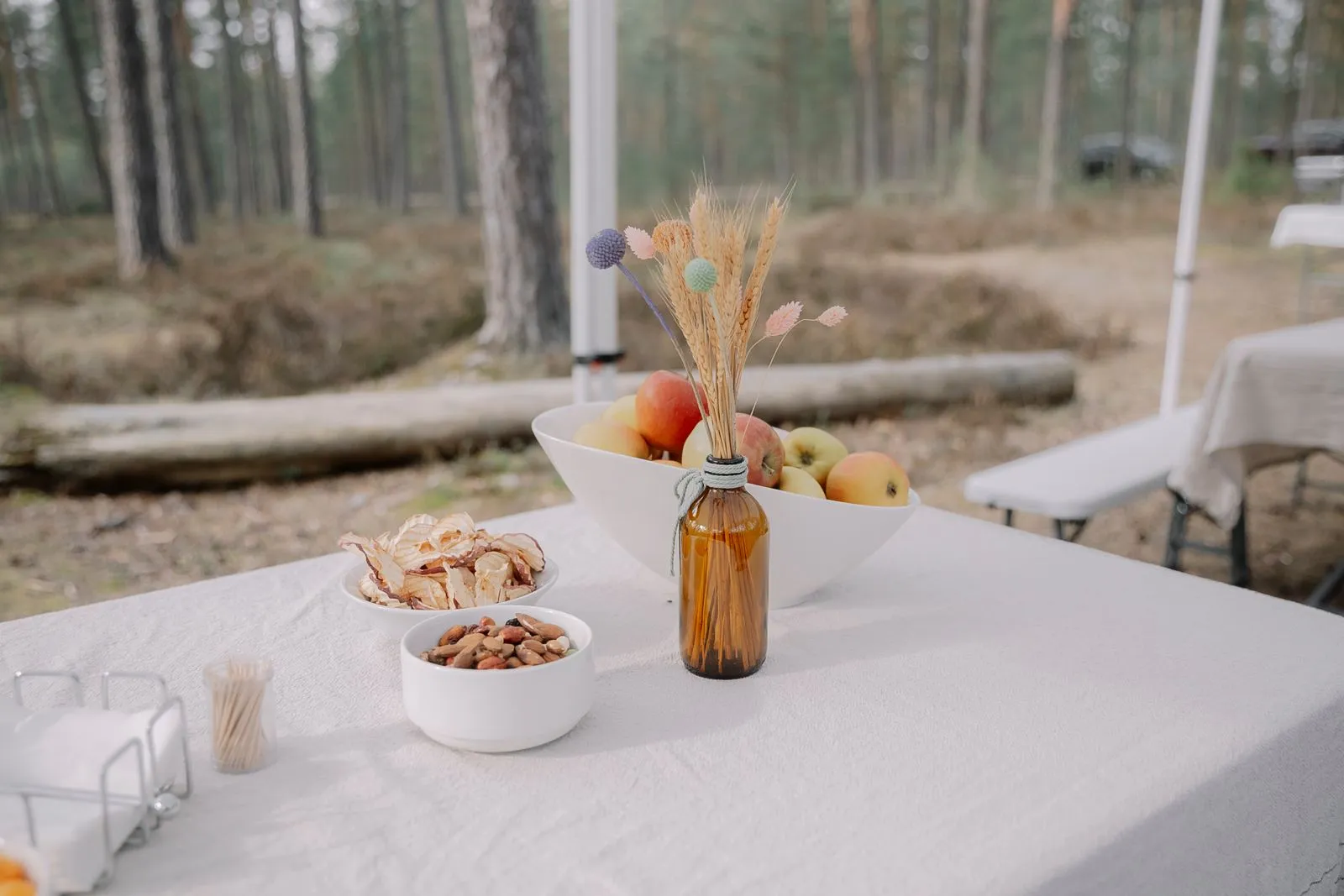
A styled picnic feels considered without making guests work for comfort. The key is to choose a few elements that support one another: a low table that suits the setting, cushions that make the seating inviting, tableware that fits the menu, and finishing touches that bring the look together. Start with the occasion and guest count, then build a simple palette and practical layout. With those decisions made first, each detail can serve both the atmosphere and the experience.
Choose the Right Low Table
Use a low table as the visual and practical center of the setup. Its height should feel comfortable for guests seated on the ground, with enough surface for food, drinks, and serving pieces. For a small group, one table may be enough. For a larger gathering, consider separate tables for dining and serving so guests have room to settle in.
Think about the ground beneath the table before arranging place settings. A level, stable surface helps prevent dishes from tipping and makes shared platters easier to reach. Leave space around the edges for guests to sit and move comfortably, and avoid crowding the table with decor that takes up useful serving space.
Make Seating Comfortable
Cushions add comfort and help define each guest’s place. Choose cushions with enough support for the length of the gathering, and arrange them so guests can sit facing one another rather than all toward the food. If the picnic is on grass or sand, a rug or blanket beneath the seating can create a more comfortable, clearly defined area.
Coordinate cushion colors with the table linens or other textiles, but vary the texture to keep the arrangement from feeling overly matched. Before guests arrive, check that seating is not too close to the table and that there is a clear path in and out. Keep a few extra cushions available when the guest count or seating needs may change.
Coordinate Practical Tableware
Select tableware according to the menu, the setting, and how guests will eat. Plates should suit the food, cups should be easy to hold, and serving utensils should be within reach of shared dishes. Reusable pieces can create a polished feel, while durable options may work better in a location where carrying delicate items is difficult.
Create cohesion through a limited color palette rather than making every piece identical. Repeat one or two colors across plates, napkins, and serving pieces, then use simple place settings that leave room for food. Arrange frequently used items where guests can reach them without leaning across the table, and keep backups and cleanup supplies nearby but out of sight.
Finish With Purposeful Details
Finishing touches should support the setting, not compete with it. A small arrangement of seasonal flowers, fabric napkins, or a few lanterns can add character while keeping the table usable. Choose decor that suits the occasion and can stay secure outdoors; lightweight pieces may shift in a breeze, and tall arrangements can obstruct conversation.
Before guests arrive, view the setup from the seating area and check how its colors, textures, and proportions work together. Remove anything that blocks serving space or makes it difficult to reach food. Gather & Grove can help bring these elements into a cohesive picnic arrangement; consider your guest list, location, and menu when planning the details.
A cohesive styled picnic balances comfort, function, and visual detail. Let the low table guide the layout, use cushions to make the seating inviting, and choose tableware and decor that complement the menu and setting. Plan around how guests will use the space, and you’ll create an inviting setup that feels thoughtfully put together.